

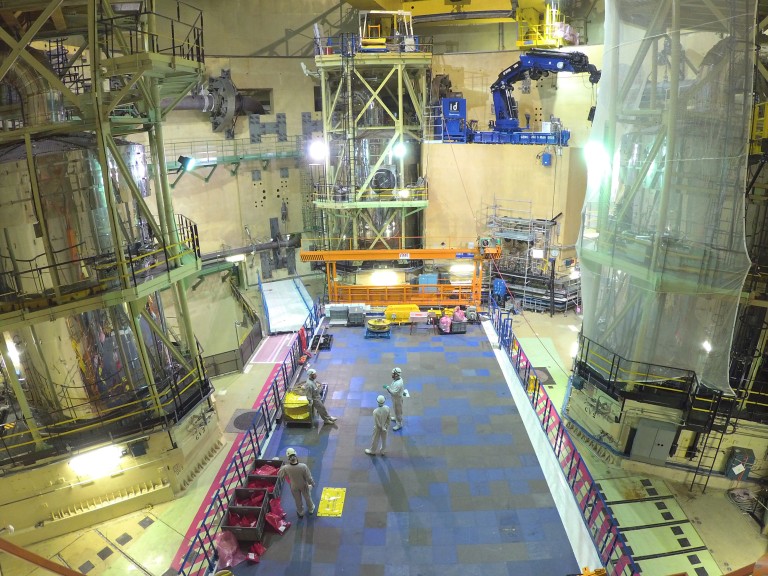
Designed by Cyclife Engineering for the EDF Group’s Decommissioning and Waste Projects Direction (DP2D), the Auxiliary Handling System (MMA) has established itself as an essential tool at the Fessenheim nuclear power plant decommissioning site. Initially intended for a single operation, the MMA quickly proved to be versatile, reliable and strategic, capable of supporting all phases of heavy lifting in a demanding nuclear environment. A true driver of performance, the MMA is a prime example of agile and sustainable engineering in the service of the energy transition.
The Auxiliary Handling System, MMA, is transforming onsite works
Designed and operated by Cyclife Engineering for EDF’s DP2D (Decommissioning and Waste Projects Department), the Auxiliary Handling System (MMA) was originally intended for a single purpose: the removal of steam generators as part of the decommissioning of EDF’s nuclear power station in Fessenheim.
Its robustness and reliability have quickly made it a strategic tool, suitable for several technical scenarios. Safe and versatile, the Auxiliary Handling System is now used during key stages of heavy lifting and handling operations in both reactor buildings.
The Auxiliary Handling System (MMA) is not merely a lifting/handling equipment; it represents a key solution for handling heavy loads in demanding environments and for long-term use.
Designed to evolve in line with operational needs, it adapts to a range of operational scenarios and ensures strict compliance with nuclear safety requirements.
Feedback from the field is unanimous: the MMA is an essential tool for improving performance. It ensures controlled lifting capacity, enhanced safety and optimal adaptability to a wide range of site conditions.
The result is a significant saving in operational time and a reduction in risks during critical phases.
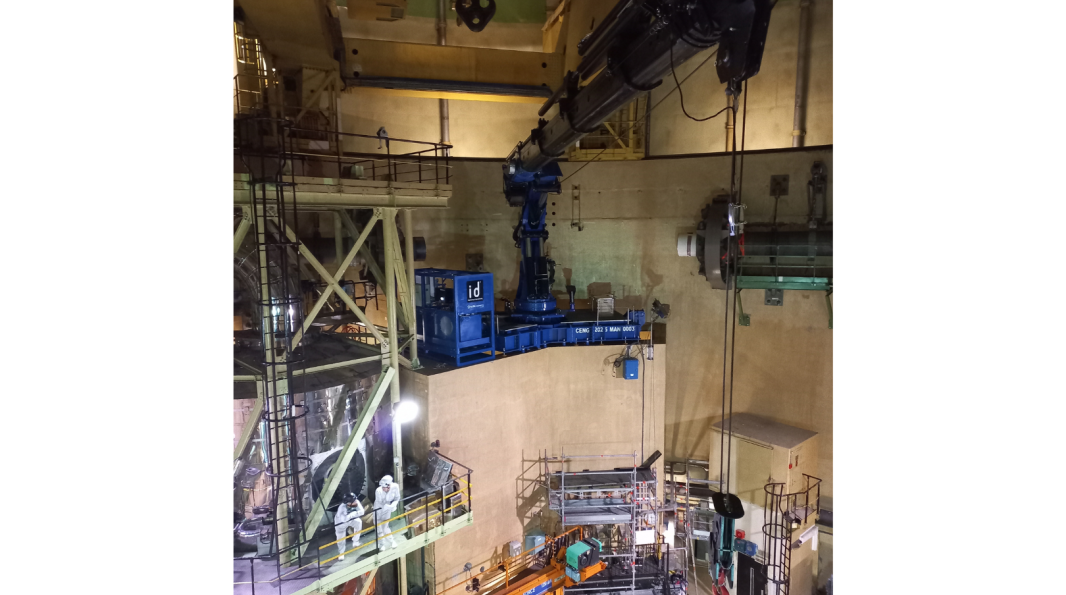
One crane, four projects, dozens of uses
The MMA was installed on the roof of the pressuriser chamber for the initial decommissioning work. This installation required the prior removal of obstructions from the pressuriser chamber, including a section of steam pipework.
Now fully operational, the MMA is being deployed across four major projects as part of the decommissioning of the EDF Fessenheim nuclear power plant:
- Installation of the jack-type lifting device (MLV) on the polar deck, required for lifting the steam generators
- Dismantling of large components
- Cutting of tank liners/internals
- Tank and ancillary works
Safety is ensured by a safety gate that automatically stops the crane from operating as soon as it is opened. A single key is used either to open this gate or to operate the crane, preventing any movement whilst the gate is being accessed and protecting personnel. Thanks to its design, and unlike standard cranes, the MMA can reach virtually every surface of the reactor building.
The MMA is mobile, reconfigurable and capable of operating on several levels of the reactor building; it can also be made available, as was the case for our partner company REEL during the renovation of the polar deck located beneath the dome of the reactor building.
Key figures about the MMA
Lifting capacity: 8 tonnes
Auxiliary Handling System
Designed by Cyclife Engineering
Agile engineering, a tool built to last
Cyclife Engineering managed this project from start to finish, drawing on its expertise in civil engineering, electrical engineering, mechanical engineering, control systems and design engineering.
“Overseeing the detailed design, manufacture and load testing of the Auxiliary Handling System was a particularly rewarding technical and personal experience. Having been successfully installed in the reactor buildings at the Fessenheim power station, the MMA has demonstrated its full reliability and performance. This project, carried out with rigour and commitment, has enabled us to strengthen our expertise at every stage: from design to commissioning. It has been a real pleasure to contribute to this achievement, which equips us with the confidence and expertise to meet the challenges of future decommissioning projects,” says Julien Tafforeau, project manager at Cyclife Engineering.
This close coordination between the design engineering team and the site team made it possible to anticipate all future constraints:
- Available space,
- Scalability,
- Compatibility with other handling systems, such as MLV
The result is a unique, secure and scalable tool that centralises lifting operations, reduces set-up times, adapts perfectly to site requirements and is built to last.